








Lunar day: 17 17: "… Thou hast made heaven, the heaven of heavens, with all their host, the earth, and all things that are therein, the seas, and all that is therein … and the host of heaven worshippeth thee." (Nehemiah 9:6) Bookmark this page.
Hebrew Kings and Regents

Kings of Israel and Judah
Click on a king for regnal data.
Absolute Time Scroll:
Click a image bubble for details.
Bible Kings Timeline

The Sure Word
For hundreds of years, scholars have questioned what appeared to be contradictions in the timelines of the Hebrew kings. In response, many well-intentioned efforts — most notably the Septuagint and some later translations — attempted to “correct” the data, but in doing so often introduced severe distortions. By contrast, the Masoretic scribes faithfully preserved the text they received it, and history is indebted to their careful transmission. Again and again, when skepticism has been directed toward the biblical record, subsequent analysis has ultimately vindicated the Scriptures.
Our interactive tools are designed to guide readers who wish to understand biblical chronology for themselves. The Bible regnal data synchronizes in such a way that the length of each king’s reign can be determined precisely to within six months, measured between Tishri (seventh month) in the autumn and Nisan (first month)` in the spring. Accordingly, this study defines winter as the season between Tishri and Nisan (marked by ❄️) and summer as the season between Nisan and Tishri (marked by ☀️).
Take up your Bible—open the books of Kings and Chronicles and follow along. See how it all pieces togther under a Divine hand.
The most effective method for establishing a precise historical framework is to construct a skeletal chronology by anchoring major events to absolute dates and then filling in the intervening details. A clear example comes from Assyrian history. In the early summer of 853 BC, a coalition of Levantine kings met the Assyrian army under Shalmaneser III at the battle of Qarqar. Among the allied rulers was Ahab of Israel.
Later, in the late Winter of 841/840 BC—Shalmaneser’s eighteenth year—the Black Obelisk records that Jehu of Israel, along with other Levantine kings, paid tribute to the Assyrian monarch. The twelve and one-half years between the battle of Qarqar and Jehu’s tribute neatly encompass the reigns of Ahaziah and Jehoram of Israel, thereby fixing these kings securely in absolute time.
Knowing the dating methods of Israel and Judah, combined with the bountiful Bible synchronisms between each kingdom, we are able to ascertain the fourth year of Solomon, which was the 480th year after the Exodus. Exactly 430 years before the Exodus, Abraham was called out of Ur of Chaldees. We can accurately fill in all of those years and all the years from Adam to Abraham. In fact, we can accurately account for all of the years from Adam to Christ.
This precision is possible because Assyrian chronology for this period is exceptionally well documented. The Assyrians maintained an unbroken annual record of major events known as the eponym system. Each year was named after a designated official, called a limmu, at the start of the new year. In 763 BC, during the eponym of Bur-Sagale, the records note a solar eclipse over Nineveh—an event that can be astronomically verified. Together, the eponym lists, king lists, monumental reliefs, and clay tablets establish an Assyrian chronology of remarkable accuracy in absolute time.
Need to Know
Biblical chronological synchronisms were written for a purpose. To understand them, the reader must invest some effort in mastering a few foundational concepts. The compilor of the book of Kings had access to the annals of the Hebrew kindoms and moved through those books in a chronological and systematic way. Without this background, the remarkable harmony of the biblical data cannot be fully appreciated. The following principles are essential.
Regnal Years
Ancient cultures recorded time by counting the regnal years of their reigning kings. Semitic nations generally employed accession dating, also known as postdating. Under this system, the year in which the old king died was counted as his final regnal year and as the accession year of the new king. The new king’s first official regnal year did not begin until the next New Year’s Day. In the vertical bar graphs above, this is represented by placing an “A” at the top of the new king’s bar, aligned with the final year of the previous king; numbering then begins with the following calendar year. Accession dating most closely approximates absolute reckoning.
Other cultures, most notably Egypt, used non-accession dating, or antedating. In this system, the year in which the old king died was both his final regnal year and the first regnal year of the new king. The new king’s second year began on the next New Year’s Day. For example, if a king ascended the throne only one month before the new year, he would already enter his second year after ruling for just that single month. In our bar graphs, this system is shown by placing a “1” at the top of the new king’s bar alongside the last year of the former king, with numbering advancing again in the following calendar year. Non-accession dating is therefore similar to inclusive reckoning.
At times, nations changed their method of reckoning, especially when a new dynasty arose. United Israel, like other Semitic nations of the ancient Near East, used accession dating. After the division of the kingdom, however, Israel under Jeroboam adopted the Egyptian system of non-accession dating. Many years later, when Jehu overthrew the Omride dynasty, Israel reverted to accession reckoning, which remained in effect until the northern kingdom ceased to exist.
In Judah, King Jehoram and his wife Athaliah introduced non-accession dating, a practice that continued until the reign of the righteous King Uzziah, who restored accession reckoning for the remainder of Judah’s history.
Calendar Years
The biblical year was traditionally divided into winter and summer, marked by the spring and autumnal equinoxes, each referred to as a “turning of the year.” In the period of the united monarchy, Israel reckoned regnal years from Tishri to Tishri, beginning in the autumn. After the schism in the summer of 931 BC, however, Jeroboam—having spent years in Egypt—introduced Nisan-to-Nisan reckoning in the northern kingdom. Israel continued this spring-based system until the nation was dissolved.
The southern kingdom of Judah, by contrast, retained Tishri-to-Tishri reckoning until its destruction in AD 70, with the brief exception of the years when Athaliah, the daughter of Jezebel, usurped the throne.
In earlier times, during the era of the patriarchs, the Hebrews followed an autumn-based calendar. At the time of the Exodus, however, God instructed Moses to designate Abib (Nisan) as the first month of the year. This established the sacred calendar, which governed religious life. The priesthood and temple officials therefore marked years from spring to spring. Prophets of priestly lineage, such as Ezekiel and Jeremiah, dated events according to this system.
Nevertheless, according to the first-century historian Flavius Josephus, Moses also preserved a civil agricultural calendar whose first month was Ethanim (Tishri). Civil authorities reckoned years from autumn to autumn. Figures such as Daniel and Nehemiah, who served in administrative and governmental roles, recorded time using this civil calendar.
Coregencies
Coregencies were common in the ancient world, yet they are not always obvious to modern historians because official records typically focused on the chief ruler of the land. Nevertheless, the regnal data reveals that several coregencies occurred. Known examples also exist: The patriarch Joseph functioned as a coregent with Pharaoh when he received the signet ring and the gold chain, symbols of shared authority. Sennacherib of Assyria famously served as a coregent with his father, Sargon II.
In Babylon, King Belshazzar ruled as a coregent with his father, Nabonidus. At the very end of that kingdom, Daniel also became a coregent—albeit briefly—when Belshazzar placed a gold chain around his neck, making him the third ruler in the realm. At times, more than one coregent shared power simultaneously.
Scripture records numerous examples of coregency in Israel and Judah. Solomon ruled as a coregent with King David during David’s final years of frailty. Jehoshaphat became a coregent when Asa was incapacitated by disease late in his reign. Jotham served as a “king in waiting” when his father, Uzziah, became a leper. Ahaz ruled as a coregent with Jotham, and Hezekiah later served as a coregent with Ahaz.
The compilers of Kings and Chronicles did not always state explicitly when a king served as a coregent, but the evidence is preserved in the regnal data. For instance, the synchronisms indicate that Jehoshaphat ruled for twenty-two years, while his epitaph records a reign of twenty-five years. This discrepancy shows that he began ruling three years before his father’s death—precisely when Asa’s foot disease rendered him incapable of governing.
When a coregency existed, a king therefore possessed two regnal number lines as shown in our graph. One reflects his total reign, beginning with his appointment as coregent; the other reflects his sole reign, beginning with his accession after the death of the previous king. Without exception, when a coregency is present, both number lines appear at least once in the biblical data. This dual attestation acts as a locking mechanism, giving the chronology a rigid and reliable structure.
As the northern kingdom neared collapse, political conditions deteriorated in both Israel and Judah, leading to a series of usurpations. During this turbulent period, Ahaz—aligned with a pro-Assyrian faction of princes—usurped his father Jotham without killing him. Ahaz rejected God, who God did not establish his disastrous kingship, and he was treated in kind by the anti-Assyrian faction who championed his successor, Hezekiah. It was a unique and complex era, yet one that further illustrates the precision and resilience of the biblical chronological record.
Scribes and Prophets
Who compiled the book of Kings and Chronicles and who provided the synchronisms?
The books of Kings present an exact ordered sequence of all the Hebrew monarchs, beginning with Saul of Israel and ending with Zedekiah of Judah. None are listed out of order. Each reign is introduced with a formal prologue. For the kings of Judah, this prologue typically includes a synchronism with a king of Israel, the king’s age at accession, his mother’s name, and an evaluation of his standing before God. The prologues for the kings of Israel are more abbreviated.
During the period of the divided monarchy—from Rehoboam and Jeroboam to Hoshea—each synchronism was referenced to the reigning king in the rival kingdom. For example, the synchronism for Asa of Judah reads: “In the twentieth year of Jeroboam king of Israel, Asa began to reign over Judah.”
These synchronisms require careful interpretation because Israel and Judah employed different systems for reckoning regnal years. Edwin Thiele proposed that scribes in each kingdom calculated synchronisms using their own dating system when referring to the rival king. Thus, Judah, which used postdating (accession dating), would have reckoned Jeroboam’s regnal year according to postdating, even though Israel itself used antedating.
This “dual-dating” theory, however, leads to an unlikely implication: that each kingdom recognized and applied the other kingdom’s New Year’s Day. To make the system work, four separate number lines would be required—Israel’s reckoning for its own kings, Israel’s reckoning for Judah’s kings, Judah’s reckoning for Israel’s kings, and Judah’s reckoning for its own kings. Such complexity is implausible.
A simpler and more coherent explanation is that the scribes of Israel and Judah did not create the synchronisms at all. While the two kingdoms shared a common heritage, they pursued separate political interests and were rarely friendly. They would, however, have recorded the deaths of foreign kings in their own annals as matters of historical record.
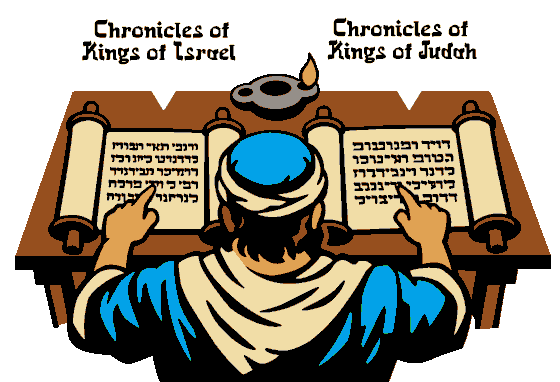
The synchronisms and prologues were constructed later by the compiler of Kings—himself a prophet—who had access to The Chronicles of Judah and The Chronicles of Israel. By laying these records side by side and aligning them according to each kingdom’s native dating system, he could accurately establish the synchronisms. This method is elegant in its simplicity.
When the reigns of Judah’s kings are plotted using Judah’s own reckoning and set alongside the reigns of Israel’s kings plotted using Israel’s own reckoning, the synchronisms align precisely, demonstrating the internal consistency, precision, and simplicity of the biblical record of Hebrew kings.
1A-Saul Israel: 40 Yrs.
👎 ⬆️Acts 13:21
And afterward they desired a king: and God gave unto them Saul the son of Cis, a man of the tribe of Benjamin, by the space of forty years (Acts 13:21).
===
1B Sabbatical & 1C Jubilee
: ⬆️And he will take your fields, and your vineyards, and your oliveyards, even the best of them, and give them to his servants. And he will take the tenth of your seed, and of your vineyards, and give to his officers, and to his servants (1 Samuel 8:14,15).
And them that had escaped from the sword carried he away to Babylon … as long as she lay desolate she kept sabbath, to fulfil threescore and ten years (2 Chronicles 36:20,21).
And he will take your fields …
Israel ceased observing the Sabbatical and Jubilee years during the reign of their first king, Saul, due to his heavy demands on their harvests.The first Sabbatical year (Tishri-to-Tishri) during Saul's reign fell in 1046 BC. Over the following 441 years—from 1046 BC to 605 BC, when Judah went into Babylonian captivity—there were 63 Sabbatical years and 9 Jubilee years. However, during this entire period, Judah observed only one Sabbatical year and one Jubilee year (in 689 BC and 688 BC, respectively).
After 62 neglected Sabbatical years and 8 neglected Jubilee years had accumulated, Judah was exiled to Babylonian captivity for 70 years, allowing the land to "enjoy its Sabbaths" as required by the Law (see Leviticus 26:34–35; 2 Chronicles 36:21). Judah entered Babylonian captivity in 605 BC, during the sixth year of the seven-year Sabbatical cycle. Seventy years later, in 535 BC (the first regnal year of Cyrus the Persian after two years of Darius the Mede), the Judeans returned to Jerusalem—again during the sixth year of the cycle. That autumn, they observed the Sabbatical year.
1E Ishbosheth Israel: 2 Yrs.
⬆️ref
Ishbosheth Saul's son was forty years old when he began to reign over Israel, and reigned two years. But the house of Judah followed David (2 Samuel 2:10).
1D David Israel 40 Yrs.
👍 ⬆️2 Samuel 5:4,5; 1 Chro. 29:27; 1 Kings 11:42),
David was thirty years old when he began to reign, and he reigned forty years (2 Samuel 5:4).
And the time that he reigned over Israel was forty years; seven years reigned he in Hebron, and thirty and three years reigned he in Jerusalem (1 Chronicles 29:27).
In Hebron he reigned over Judah seven years and six months: and in Jerusalem he reigned thirty and three years over all Israel and Judah (2 Samuel 5:5, ).
1 Chronicles says David….
David acceded to the throne ("A") during Saul's fortieth year. 1 Chronicles states that David reigned for seven years in Hebron and thirty years in Jerusalem, whereas 2 Samuel says he reigned seven and one-half years in Hebron and thirty years in Jerusalem. Is the Chronicler therefore less accurate than 2 Samuel?
No. Together, these two verses provide chronological precision to within six months—an accuracy that characterizes the regnal data for all the kings of Israel and Judah. Chronicles presents regnal calendar years running from Tishri to Tishri using accession-year dating, while 2 Samuel measures the true elapsed time from David’s first day on the throne until his conquest of Jerusalem, and then continues until his death. Seven and one-half absolute years can fit inside seven regnal accession-type years, which can vary from just over seven years to almost eight full years, depending on what time of year the king acceded to the throne.
These two different time expression types work in tandem to yield a precise chronology. Saul died and David ascended the throne in the winter of 1010/1009 BC, just after Tishri. David conquered Jerusalem seven and one-half years later, in the summer of 1002 BC. Thirty-three years after that, he died in the summer of 969 BC.
1G Solomon Full Reign 40 Yrs.
👍 ⬆️ref
Now king David was old and stricken in years; and they covered him with clothes, but he gat no heat (1 Kings:1). Then Adonijah the son of Haggith exalted himself, saying, I will be king: and he prepared him chariots and horsemen, and fifty men to run before him (1 Kings 1:5).
And king David said, Call me Zadok the priest, and Nathan the prophet, and Benaiah the son of Jehoiada …. The king also said unto them, … cause Solomon my son to ride upon mine own mule, and bring him down to Gihon: And let Zadok the priest and Nathan the prophet anoint him there king over Israel: and blow ye with the trumpet, and say, God save king Solomon. Then ye shall come up after him, that he may come and sit upon my throne; for he shall be king in my stead: and I have appointed him to be ruler over Israel and over Judah (1 Kings 1:32–35).
And the time that Solomon reigned in Jerusalem over all Israel was forty years (1 Kings 11:42).
Solomon became a coregent in the summer …
Solomon became a coregent in the summer of 970 BC, about a year before his father, King David, died. When a prince became a coregent, he was not assigned an accession year; he was already considered to be in his first year of total rule. Accession years were reserved for calendar purposes. When the old king died, the new king entered his accession year, and his first regnal year began on the next New Year’s Day, which in this era was Tishri 1. Therefore, kings who began their rule as coregents had two regnal number lines, both of which are reflected in biblical regnal data and synchronisms. In Solomon’s case, his total reign was recorded as forty years, even though he ruled for only thirty-eight years after David’s death. All synchronisms—such as references to his fourth and eleventh years—are tied to the number line associated with his sole reign.
1J Solomon Sole reign 38 Yrs.
⬆️… And they made Solomon the son of David king the second time, and anointed him unto the Lord to be the chief governor, and Zadok to be priest (1 Chronicles 29:22).
Thus David … died in a good old age … and Solomon his son reigned in his stead (1 Chron. 29:26–28).
At the very end of his life …
At the very end of his life, in the summer of 969 BC, David was temporarily strengthened and was able to stand on his feet so that he could address the nation one last time. He publicly endorsed his son Solomon and encouraged the people to stand behind him, establish his rule, and assist him in building the temple with the costly materials David had amassed. The nation anointed Solomon again—this time as chief ruler rather than as vice-regent. Under accession dating, whenever a king died, his successor was given an accession year, even if he had already been annointed as a coregent earlier. David died shortly thereafter, having completed a full forty-year reign.
1L Temple Begin 4th/480th Year
⬆️And it came to pass in the four hundred and eightieth year after the children of Israel were come out of the land of Egypt, in the fourth year of Solomon's reign over Israel, in the month Zif, which is the second month, that he began to build the house of the LORD (1 Kings 6:1).
In the 480th year after Exodus ….
1 Kings 6:1 is the primary biblical text used to establish the date of the Exodus from Egypt. If Solomon’s fourth year is dated correctly, the date of the Exodus can likewise be determined with confidence. Nevertheless, Bible chronologists and prophecy students often stumble at this point. The most widely accepted date for the Exodus is the spring of 1446 BC. This date is based largely on the influential chronology of Edwin Thiele, presented in his landmark work The Mysterious Numbers of the Hebrew Kings.
Thiele concluded that the schism dividing the kingdoms of Israel and Judah occurred in the winter of 931/930 BC. Since Solomon reigned for forty years, it appears straightforward to count back forty years from 930 BC to arrive at 970 BC as the beginning of his reign, then move forward four years to identify 966 BC as Solomon’s fourth year. From that point, moving back 480 years yields an apparent Exodus date of 1446 BC. There are a theme involving forty-year increments found here and in the era of the Judges, but the actual distribution of years is more nuanced.
Solomon’s forty-year reign began with a coregency, making the total an inclusive figure. In absolute terms, he ruled for only thirty-nine years. Likewise, the “480th year” mentioned in 1 Kings 6:1 is an ordinal, not a cardinal, expression. As a result, the actual time elapsed from the Exodus to the month of Ziv in Solomon’s fourth year amounts to 479 absolute years plus a few weeks.
Solomon’s fourth year must therefore be dated from the beginning of his sole reign following David’s death in 969 BC, yielding a fourth year of 965 BC. By that time, Solomon had firmly secured his throne by eliminating four major threats: Adonijah, Abiathar the high priest, Joab, and Shimei (see 1 Kings 2:12–46).
Only after these threats were removed could Solomon turn his attention fully to such a massive national building project. Subduing the threats was a process that required more than three years. As Scripture records, “at the end of three years” Benaiah executed Shimei, and “the kingdom was established in the hand of Solomon” (1 Kings 2:46).
And Hiram king of Tyre sent his servants unto Solomon; for he had heard that they had anointed him king in the room of his father …. And Solomon sent to Hiram, saying, … the Lord my God hath given me rest on every side, so that there is neither adversary nor evil occurrent. And, behold, I purpose to build an house unto the name of the Lord my God … (1 Kings 5:1–5).
Counting back 479.02 years from the month of Ziv in 965 BC yields an Exodus date of Abib 15, 1444 BC—not 1446 BC. Additional lines of evidence presented elsewhere confirm this date. See our Exodus study.
1M Temple End 11th/7th Year
⬆️And in the eleventh year, in the month Bul, which is the eighth month, was the house finished throughout all the parts thereof, and according to all the fashion of it. So was he seven years in building it (1 Kings 6:38).
The eleventh year …
Solomon spent seven years building the temple, from his fourth regnal year through his eleventh year. This result is obtained only if the king’s regnal years are reckoned from autumn to autumn (Tishri to Tishri) and the seven inclusive years of construction are reckoned from spring to spring, as would be appropriate for temple-related activities governed by the sacred year.
Kings who ruled from Jerusalem used Tishri-to-Tishri reckoning throughout their history, with the brief exception of the period when Athaliah, the daughter of Jezebel, exercised influence over Judah. Israel, however, employed Nisan-to-Nisan (Abib) reckoning until the nation was carried away into exile and dispersed among the nations.
1N Rehoboam Judah: 17 Yrs.
👎 ⬆️(1 Kings 12:1–24, 14:21-31) (2 Chron. 10:1–12:16)
And Solomon slept with his fathers, and was buried in the city of David his father: and Rehoboam his son reigned in his stead (1 Kings 11:43).
… Rehoboam was one and forty years old when he began to reign, and he reigned seventeen years in Jerusalem … (2 Chronicles 12:13).
Rehoboam accedes to the throne …
In the summer of 931 BC—the fortieth year of Solomon’s total reign and the thirty-eighth year of his sole reign—Rehoboam ascended the throne. Edwin Thiele, however, dated the schism between the northern tribes of Israel and the southern tribes of Judah and Benjamin to six months later, in the winter of 931/930 BC. Here, “winter” refers to the six-month period between Tishri in the autumn and Nisan in the spring. Such winter dates are typically expressed with two Julian year numbers because the event may have occurred shortly before or after the January year change.
To harmonize the biblical synchronisms between the rival kingdoms, Thiele proposed a very complex dual dating system, though it did not fully resolve all difficulties. Bible study is challenging in its simplicity. Indeed, the two kingdoms employed different regnal dating methods: Israel used Egyptian-style antedating (non-accession dating) and reckoned regnal years from spring to spring, while Judah used Semitic post-dating (accession dating) and reckoned regnal years from autumn to autumn.
When the reigns of successive kings from each nation are plotted side by side using each kingdom’s own dating system, the Bible synchronisms align precisely and fall into place smoothly. Although the resulting chronology differs very slightly from Thiele’s results, several long-standing issues are resolved by this approach. Israel continued to use Nisan-to-Nisan (Abib) reckoning until the nation was carried away into exile and dispersed among the nations.
1O Jeroboam Israel 22 Yrs.
👎 ⬆️(1 Kings 12:25–14:20)
… So Jeroboam and all Israel came and spake to Rehoboam, saying, Thy father made our yoke grievous: now therefore ease thou somewhat the grievous servitude of thy father … (2 Chronicles 10:4).
… And [Rehoboam] answered them after the advice of the young men, saying, My father made your yoke heavy, but I will add thereto: my father chastised you with whips, but I will chastise you with scorpions (2 Chronicles 10:7).
… The cause was of God, that the Lord might perform his word, which he spake … to Jeroboam the son of Nebat (2 Chronicles 10:15). And Israel rebelled against the house of David unto this day (2 Chronicles 10:15).
And the days which Jeroboam reigned were two and twenty years: and he slept with his fathers, and Nadab his son reigned in his stead (1 Kings 14:20).
Solomon therefore sought to kill Jeroboam. But Jeroboam arose and fled into Egypt, to Shishak king of Egypt, and remained there until the death of Solomon (1 Kings 11:43).
Jeroboam spent the final years of Solomon’s reign in Egypt under the protection of Pharaoh Shishak, where he became deeply immersed in Egyptian culture. After Solomon’s death, Jeroboam returned to Israel, and following the rebellion, he was proclaimed king over the northern tribes. During this period, the first month of the Egyptian civil calendar, Thoth, coincided with Nisan, making it easy to adopt a spring-based new year similar to that of Egypt.
The Egyptians also practiced antedating (non-accession) reckoning, which Jeroboam adopted for use in Israel. He altered the calendar and festival dates so that worshipers would no longer feel compelled to go to Jerusalem. Most grievously, he set up idols at Bethel and Dan—golden calves modeled after Egyptian prototypes, the very form of idolatry that had brought disaster upon Israel in the wilderness after the Exodus.
These abominable practices doomed the northern kingdom from its inception. A curse rested upon Jeroboam and his dynasty, and every subsequent king of Israel received a dishonorable epitaph for “walking in the sins of Jeroboam” until the nation ultimately dissolved.
1! Shoshenq I Invasion
⬆️1 Kings 14:25-28, 2 Chronicles 12-14
And it came to pass, when Rehoboam had established the kingdom, and had strengthened himself, he forsook the law of the Lord, and all Israel with him (2 Chronicles 12-1).
And it came to pass in the fifth year of king Rehoboam, that Shishak king of Egypt came up against Jerusalem: And he took away the treasures of the house of the Lord, and the treasures of the king's house; he even took away all: and he took away all the shields of gold which Solomon had made. And king Rehoboam made in their stead brasen shields … (1 Kings 14:25-27).
Shoshenq 1 reigned from ….
Kenneth Kitchen, the noted British Egyptologist and biblical scholar, dated the reign of Shoshenq I to 945–924 BC, a chronology that has been widely supported by other Egyptologists. Some later scholars adjusted these dates by as little as two years in an effort to align them with Edwin Thiele’s chronology. If that adjustment were correct, it would imply that Shoshenq died only one year after his campaign into Judah and the Levant.
However, the reliefs indicate that Shoshenq must have lived at least two or three years after the invasion. Our study suggests that Shoshenq’s conquest of Jerusalem occurred in the early part of 926 BC, during Rehoboam’s fifth regnal year, a date that nestles nicely into the scholarly consensus for the reign of Shoshenq I.
1P-Abijah Judah 3 Yrs.
👎 ⬆️1 Kings 15:1–8; 2 Chron. 13:1–22
Now in the eighteenth year of king Jeroboam the son of Nebat reigned Abijam over Judah. Three years reigned he in Jerusalem. and his mother's name was Maachah, the daughter of Abishalom. And he walked in all the sins of his father … (1 Kings 15:1–3).
Now in the eighteenth year of king Jeroboam began Abijah to reign over Judah. He reigned three years in Jerusalem. His mother's name also was Michaiah the daughter of Uriel of Gibeah. And there was war between Abijah and Jeroboam (2 Chron. 13:1,2).
Abijah (aka Abijam) engaged Jeroboam in war and won a decisive battle, slaying four-hundred thousand men of Israel. Nevertheless, he was not favored in God's sight.
1Q-Asa Judah 41 Yrs.
👍 ⬆️1 Kings 15:9–24; 2 Chron. 14:1–16 – 16:14
And in the twentieth year of Jeroboam king of Israel reigned Asa over Judah. And forty and one years reigned he in Jerusalem. And his mother's name was Maachah, the daughter of Abishalom. And Asa did that which was right in the eyes of the Lord, as did David his father (1 Kings 15:9–11).
And Asa did that which was good and right in the eyes of the Lord his God (2 Chron. 14:2). … In his days the land was quiet ten years (2 Chron. 14:1). 10 So they gathered themselves together at Jerusalem in the third month, in the fifteenth year of the reign of Asa (2 Chron. 14:10). And there was no more war unto the five and thirtieth year of the reign of Asa (2 Chron. 14:10). In the six and thirtieth year of the reign of Asa Baasha king of Israel came up against Judah, and built Ramah, to the intent that he might let none go out or come in to Asa king of Judah (2 Chron. 15:16).
And Asa in the thirty and ninth year of his reign was diseased in his feet, until his disease was exceeding great: yet in his disease he sought not to the Lord, but to the physicians. And Asa slept with his fathers, and died in the one and fortieth year of his reign (2 Chron. 16:12,13).
Asa was a good king, and God granted him peace throughout the land of Judah. He seized this opportunity to undertake major building projects and promote prosperity. During his reign, he also constructed royal sepulchers in Jerusalem, which served as burial places for the kings for centuries thereafter.
Despite repeated warnings, however, Asa ceased to rely fully on God and instead placed his trust in human alliances, resorting to bribery and political maneuvering. As a result, his later years were marked by warfare and internal oppression.
Three years before his death, Asa was afflicted with a disease in his feet. At that time, his son Jehoshaphat was appointed coregent and ruled alongside him for three inclusive years.
For the eyes of the Lord run to and fro throughout the whole earth, to shew himself strong in the behalf of them whose heart is perfect toward him. Herein thou hast done foolishly: therefore from henceforth thou shalt have wars (2 Chron. 16:9).
1R-Nadab Israel 2 Yrs.
👎 ⬆️1 Kings 15:25–31
And Nadab the son of Jeroboam began to reign over Israel in the second year of Asa king of Judah, and reigned over Israel two years (1 Kings 15:25).
And he did evil in the sight of the Lord, and walked in the way of his father, and in his sin wherewith he made Israel to sin (1 Kings 15:26).
Nadab only reigned for one absolute year, but since his reign passed across New Year's Day, he officially reigned for two regnal years.
1S-Baasha Israel 24 yrs.
👎 ⬆️1 Kings 15:32–16:7;
In the third year of Asa king of Judah began Baasha the son of Ahijah to reign over all Israel in Tirzah, twenty and four years. And he did evil in the sight of the Lord, and walked in the way of Jeroboam, and in his sin wherewith he made Israel to sin (1 Kings 15:33,34).
Baasha and Asa were frequently at war, interrupted only by a ten-year period of peace spanning from Asa’s fifth year to his fifteenth. Baasha founded a new dynasty after defeating Nadab and extinguishing the house of Jeroboam, in fulfillment of the word of the Lord. Nevertheless, he continued Jeroboam’s abomination by maintaining the golden calves at Bethel in the south and Dan in the north.
As a result, Baasha received the same dreadful curse pronounced upon Jeroboam and other especially wicked rulers:
“Anyone belonging to Baasha who dies in the city the dogs will eat, and anyone who dies in the field the birds will devour” (1 Kings 16:4).
This judgment follows a recurring biblical pattern: those who fall under divine curse are left for dogs in the city or birds in the open field. Goliath, Ahab, Jezebel, and others met such ends. Scripture extends this imagery even to the final conflict yet to come:
“And I saw an angel standing in the sun; and he cried with a loud voice, saying to all the birds flying in midheaven, ‘Come, gather yourselves together for the great supper of God, so that you may eat the flesh of kings, and the flesh of commanders, and the flesh of mighty men, and the flesh of horses and their riders, and the flesh of all people, both free and slave, small and great’” (Revelation 19:17–18).
1T-10 Years Peace
⬆️2 Chron. 14 and 15
… In his [Asa's] days the land was quiet ten years (2 Chron. 14:1).
Therefore he said unto Judah, Let us build these cities, and make about them walls, and towers, gates, and bars, while the land is yet before us; because we have sought the Lord our God, we have sought him, and he hath given us rest on every side. So they built and prospered (2 Chron. 14:7).
1U-Zera Invasion
⬆️2 Chron. 14 and 15
And there was no more war unto the five and thirtieth year of the reign of Asa (2 Chron. 15:19).
And there came out against them Zerah the Ethiopian with an host of a thousand thousand, and three hundred chariots; and came unto Mareshah (2 Chron. 14:9).
“And Asa cried unto the Lord his God, and said, Lord, it is nothing with thee to help, whether with many, or with them that have no power: help us, O Lord our God; for we rest on thee, and in thy name we go against this multitude. O Lord, thou art our God; let no man prevail against thee. So the Lord smote the Ethiopians before Asa, and before Judah; and the Ethiopians fled” (2 Chronicles 14:11–12).
This passage encapsulates the principle by which true success in conflict is achieved. Victory came only when a king fully grasped this lesson: dependence upon God, rather than human strength, is decisive.
Yet each king seemed required to learn this truth personally. Hezekiah, for example, learned it through experience. When he relied on the “arm of flesh,” he suffered defeat. Later, when he placed his trust wholly in the Lord, he achieved overwhelming victory.
And he [Obed the Prophet] went out to meet Asa, and said unto him, Hear ye me, Asa, and all Judah and Benjamin; The Lord is with you, while ye be with him; and if ye seek him, he will be found of you; but if ye forsake him, he will forsake you.
Unfortuantely, Asa, who had shown so much faith early on, somehow stumbled. He turned to the arm of flesh in the next crisis, despite a specific prophetic warning against doing so. He learned the lesson through hardship and perpetual war. Asa became bitter and oppressive in his latter years as a result. Nevertheless, our lives are measured by the overall path we travel, not our stumbling. Asa was mentiond among the few good kings of the Divided Kingdom.
1U-Baasha Conflict
⬆️2 Chron. 14 and 15
In the six and thirtieth year of the reign of Asa Baasha king of Israel came up against Judah, and built Ramah, to the intent that he might let none go out or come in to Asa king of Judah (2 Chron. 16:1).
The biblical authors wrote under the inspiration of the Spirit, yet they were also human. At times, they incorporated material from official records that they may not have fully understood, or—on rare occasions—later copyists miscopied a detail. As a result, certain passages invite closer examination. When such passages are carefully investigated within their historical and chronological context, the apparent difficulties are consistently resolved.
One example is the age of Ahaziah of Judah at his accession. 2 Kings 8:26 states that he was twenty-two years old, whereas 2 Chronicles 22:2 gives his age as forty-two. When these figures are evaluated within the broader chronological framework, it becomes clear that Ahaziah was twenty-two. The discrepancy is resolved through redundancy and contextual analysis.
A similar issue appears in the account of the Assyrian king Sennacherib. Scripture states that he came against Judah in Hezekiah’s fourteenth year, yet the narrative appears to merge two separate invasions. Closer inspection shows that Sennacherib invaded Judah in 701 BC and again in 688 BC, the latter campaign ending in catastrophic defeat for Sennacherib.
Another apparent difficulty arises from 2 Chronicles 14:10, which states, “There was no more war unto the five and thirtieth year of the reign of Asa,” and 2 Chronicles 16:1, which reads, “In the thirty-sixth year of the reign of Asa, Baasha king of Israel came up against Judah.” At first glance, these verses seem problematic because Baasha was no longer alive in Asa’s thirty-fifth or thirty-sixth regnal year.
Investigation reveals, however, that these references do not pertain to Asa’s personal reign, but to the thirty-fifth and thirty-sixth years since the division of the united monarchy. This division functioned as a recognized epoch marker, much like the “480th year” cited in Solomon’s time. These synchronisms therefore confirm, rather than contradict, the chronological framework established thus far.
When this epochal framework is applied, the sequence of events becomes clear. In the early spring of 897/896 BC, Zerah the Ethiopian invaded Judah with an immense army. Asa and his smaller force decisively defeated and plundered them. About a month later, the anniversary of the schism advanced from the thirty-fifth to the thirty-sixth year, though it remained Asa’s fifteenth regnal year until the following autumn.
The victory was so decisive that many from the northern tribes sought to join Judah. As Scripture records, “They gathered themselves together at Jerusalem in the third month, in the fifteenth year of the reign of Asa” (2 Chronicles 15:10).
Alarmed by this migration, "… Baasha king of Israel went up against Judah, and built Ramah, that he might not suffer any to go out or come in to Asa king of Judah (2 Chron. 15:17). Asa, however, responded poorly. Instead of trusting in God, he formed an alliance with Syria, an action that displeased the Lord. From that point forward, Asa’s reign was marked by continual warfare, and the rest he once enjoyed never returned.
1V-Elah Israel
👎 ⬆️1 Kings 16:6–14
In the twenty and sixth year of Asa king of Judah began Elah the son of Baasha to reign over Israel in Tirzah, two years (1 Kings 16:8).
Elah ruled for approximately one year, yet he is credited with a two-year reign because Israel employed non-accession dating and his rule crossed a New Year’s Day. By contrast, Ahaziah of Judah ruled for about a year but is credited with only one year because his reign did not cross a New Year’s Day.
Elah was assassinated by Zimri, who reigned only seven days—exactly as the biblical record states. Even such a brief rule qualified a man for inclusion in the royal succession lists. The system worked as follows:
If a king ruled for more than one month but less than twelve inclusive months, his reign was recorded in months. If he ruled for more than eleven months but less than a full year, he was credited with one year. If he reigned for one full year or longer, his rule was measured in whole years.
1K-Zimri Israel 7 Days.
👎 ⬆️1 Kings 16:15–20
In the twenty and seventh year of Asa king of Judah did Zimri reign seven days in Tirzah. And the people were encamped against Gibbethon, which belonged to the Philistines (1 Kings 16:15).
Zimri, in his thirst for power, executed God's judgment against the house of Baasha, but Zimri continued in the sins of Jeroboam, and his fate became a warning to other usurpers.
1W-Omr1 Israel 12 Years
👎 ⬆️1 Kings 16:21–28
Tibni Israel 6 Years 885/884 BC – ☀️ 880 BC
In the twenty and seventh year of Asa king of Judah did Zimri reign seven days in Tirzah …. And the people that were encamped heard say, Zimri hath conspired, and … slain the king: wherefore all Israel made Omri, the captain of the host, king over Israel that day in the camp. … And they besieged Tirzah. And it came to pass, when Zimri saw that the city was taken, that he … burnt the king's house over him with fire, and died (1 Kings 16:15–18).
In the thirty and first year of Asa king of Judah began Omri to reign over Israel, twelve years: six years reigned he in Tirzah. And he bought the hill Samaria of Shemer … and built on the hill, and called the name of the city … Samaria. But Omri wrought evil … worse than all that were before him. For he walked in all the way of Jeroboam the son of Nebat … (1 Kings 16:23–26).
The Omride dynasty proved to be one of the most destructive forces in Israel’s history. Omri himself became well known throughout the Near East because of the alliances and trade networks he forged with surrounding idolatrous nations. His reputation was so widespread that Assyria continued to refer to later Israelite kings as “sons of Omri” long after the dynasty had ended.
Omri permitted his son Ahab to marry Jezebel, the daughter of Ethbaal, king of Sidon, thereby allowing Baal worship to take deep root and flourish in Israel. Such intermarriages were strictly forbidden by the Lord precisely because of their corrupting influence.
Jezebel’s sway over Ahab and the northern kingdom eventually spread into Judah through the marriage of her daughter Athaliah to Jehoram, the son of Jehoshaphat—an alliance that nearly extinguished the Davidic dynasty.
1X-Omri Israel 6 Yrs
👎 ⬆️1 Kings 16:21–28
In the thirty and first year of Asa king of Judah began Omri to reign over Israel, twelve years: six years reigned he in Tirzah (1 Kings 16:23).
“Then the people of Israel were divided into two factions: half followed Tibni son of Ginath to make him king, and half followed Omri. But the people who followed Omri prevailed over those who followed Tibni son of Ginath, so Tibni died and Omri reigned” (1 Kings 16:21–22).
“In the thirty-first year of Asa king of Judah, Omri began to reign over Israel for twelve years. He reigned six years in Tirzah, and he bought the hill of Samaria from Shemer … built on the hill, and called the name of the city … Samaria” (1 Kings 16:23–26).
This episode provides yet another example of political division in the northern kingdom. After Zimri assassinated Elah, all Israel initially united to confront him at Tirzah. Once the city fell, however, the nation fractured over who should rule. Half supported Omri, while the other half rallied behind Tibni.
Edwin Thiele proposed that Tibni functioned as a rival king for six years before Omri finally eliminated him and transferred the capital from Tirzah to Samaria. Yet because Scripture supplies no independent regnal data for Tibni, it is equally plausible that his challenge was short-lived. The six- and twelve-year figures associated with Omri appear to be provided simply for completeness—much like the seven-and-a-half–year and thirty-three–year totals recorded for David’s reigns in Hebron and Jerusalem.
For this reason, our study does not include Tibni or Athaliah in the official king lists of their respective nations, since the compiler of Kings did not grant them formal prologues or regnal summaries. Other reconstructions may include them, thereby yielding a total of twenty kings in each kingdom after the division of the united monarchy.
1Y-Ahab Israel 22 Yrs
👎 ⬆️1 Kings 16:29 – 22:40
And in the thirty and eighth year of Asa king of Judah began Ahab the son of Omri to reign over Israel: and Ahab the son of Omri reigned over Israel in Samaria twenty and two years. And Ahab the son of Omri did evil in the sight of the Lord above all that were before him (1 Kings 16:29,30).
Spring was the customary season when kings went out to war (see 2 Samuel 11:1). Because both Israel and Assyria reckoned their regnal years from Nisan, battles dated to a particular year can be difficult to place precisely within that cycle—whether they occurred shortly after Nisan at the beginning of the year or near its close just before the next Nisan.
Warfare in winter was relatively uncommon until the rise of standing armies, though some ancient accounts mention floodwaters, suggesting occasional late-winter campaigns.
In the spring of 853 BC, after Nisan, Ahab joined a coalition of Levantine kings against Assyria in Shalmaneser III’s sixth year at the Battle of Qarqar. Scripture does not record this engagement, perhaps because the outcome was largely inconclusive. The Assyrian annals alone preserve the account, describing Ahab of Samaria as contributing ten thousand chariots—an assertion that accords with the biblical record of Ahab acquiring chariots through victories over Syria.
1Z-Jehoshaphat Judah 25 Years.
⬆️1 Kings 22:41–50; 2 Chron. 17:1–21:3
And Jehoshaphat the son of Asa began to reign over Judah in the fourth year of Ahab king of Israel. Jehoshaphat was thirty and five years old when he began to reign; and he reigned twenty and five years in Jerusalem. And his mother's name was Azubah the daughter of Shilhi. And he walked in all the ways of Asa his father; he turned not aside from it, doing that which was right in the eyes of the Lord … (1 Kings 22:41–43).
34 Now the rest of the acts of Jehoshaphat, first and last, behold, they are written in the book of Jehu the son of Hanani, who is mentioned in the book of the kings of Israel (2 Chron. 20:31–34).
Jehoshaphat expanded upon the reforms begun by his father. In his third regnal year, he commissioned princes and Levites to travel throughout the cities of Judah, teaching the Law of the Lord. Significantly, this third year coincided with a Sabbatical year—a time when the Levites traditionally read the Law publicly. Over time, this practice developed into a three-and-a-half–year synagogue reading cycle that aligned with the Sabbatical rhythm.
Scripture records this initiative: “They taught in Judah, and had the book of the law of the Lord with them, and went throughout all the cities of Judah and taught the people” (2 Chronicles 17:9). Moses had earlier commanded a similar observance: “At the end of every seven years, in the year of release, at the Feast of Tabernacles, when all Israel comes to appear before the Lord your God… you shall read this law before all Israel in their hearing” (Deuteronomy 31:10–11).
Jehoshaphat became renowned among later generations for the system of justice he established. The Kidron Valley—later known as the Valley of Jehoshaphat—came to be associated with judgment and burial by those who sought justice in the afterlife.
King Jehoshaphat joined King Ahaziah in building ships to go to Tarshish. Ships are a Bible sybol for commerce. However, God dashd the ships to show His disfavor.
Yet few biblical figures possess an unblemished record. Jehoshaphat entered into a political alliance with Ahab of Israel, and their families intermarried. This forbidden partnership nearly destroyed the kingdom of Judah, and Jehoshaphat lived long enough to witness its devastating consequence.
2A-Ahaziah Israel 2 Yrs.
👎 ⬆️1 Kings 22:51 – 2 Kings 1:18
Ahaziah the son of Ahab began to reign over Israel in Samaria the seventeenth year of Jehoshaphat king of Judah, and reigned two years over Israel. And he did evil in the sight of the Lord, and walked in the way of his father, and in the way of his mother, and in the way of Jeroboam the son of Nebat, who made Israel to sin: For he served Baal … (1 Kings 22:51–53).
Ahaziah fell through a lattice and was seriously injured. Rather than seeking the Lord to learn whether he would recover, he sent messengers to Ekron to consult Baal-zebub, the so-called “lord of the flies.”
Before they reached their destination, the envoys were intercepted by Elijah, who was nearing the end of his prophetic ministry before being taken up from the earth. Nevertheless, Elijah continued to be active during part of the reign of Jehoram of Judah.
2B-Joram Israel 12 (11)
👎 ⬆️2 Kings 3:1–8:15
So he [Ahaziah] died according to the word of the Lord which Elijah had spoken. And Jehoram reigned in his stead in the second year of Jehoram the son of Jehoshaphat king of Judah; because he had no son (2 Kings 1:17).
Now Jehoram the son of Ahab began to reign over Israel in Samaria the eighteenth year of Jehoshaphat king of Judah, and reigned twelve years. And he wrought evil in the sight of the Lord; but not like his father, and like his mother: for he put away the image of Baal that his father had made. Nevertheless he cleaved unto the sins of Jeroboam the son of Nebat, which made Israel to sin; he departed not therefrom (2 Kings 3:1–3).
Jehoram was the final king of the Omride dynasty. One biblical account assigns him a reign of twelve years, while another—written after Jehu overthrew him—credits him with eleven. These differing totals reflect not a contradiction, but a shift in Israel’s method of regnal reckoning.
Since the schism in the summer of 931 BC, the northern kingdom had employed non-accession dating. Under the new dynasty that aligned itself with Assyria, however, Israel adopted accession dating while retaining a spring-to-spring regnal year, consistent with Assyria, Babylon, and other Semitic states.
Edwin Thiele proposed that scribes in each kingdom composed the biblical synchronisms and suggested that the one-year discrepancy in Jehoram’s reign resulted from Judah shifting from accession to non-accession dating. Yet that change in Judah had already taken place earlier, during the reigns of Jehoram of Judah and Athaliah, following Jehoshaphat's death.
It was as though the Omride dynasty had poured its practices into Judah just before being extinguished in Israel—preserving its methods, policies, and religious influence south of the border even after its political collapse.
2C-Joram Judah 8 Yrs
👎 ⬆️2 Kings 8:16–24:2 2 Chron. 21:4–20
And in the fifth year of Joram the son of Ahab king of Israel, Jehoshaphat being then king of Judah, Jehoram the son of Jehoshaphat king of Judah began to reign. Thirty and two years old was he when he began to reign; and he reigned eight years in Jerusalem. And he walked in the way of the kings of Israel, as did the house of Ahab: for the daughter of Ahab was his wife: and he did evil in the sight of the Lord (2 Kings 8:16–18).
And it came to pass, that in process of time, after the end of two years, his bowels fell out by reason of his sickness: so he died of sore diseases. And his people made no burning for him, like the burning of his fathers. Thirty and two years old was he when he began to reign, and he reigned in Jerusalem eight years, and departed without being desired. Howbeit they buried him in the city of David, but not in the sepulchres of the kings (2 Chron. 21:19,20).
Jehoram of Judah began his reign as a coregent with Jehoshaphat in 854/853 BC, reckoned from Tishri to Tishri, which yields a total reign of thirteen years. He did not assume sole authority until the summer of 848 BC, after which he ruled independently for eight years.
Jehoram was not a righteous king and fell strongly under the influence of his foreign wife, Athaliah. When Scripture says that he “walked in the ways of the kings of Israel,” it signifies that he adopted Israel’s political methods and religious practices during his sole reign—including its calendrical system and the promotion of Baal worship.
Ordinarily, the regnal data alone establish the chronology. At times, however, the compilers of Kings and Chronicles added clarifying statements. One such synchronism notes that Jehoram began his sole reign in the fifth year of Joram of Israel while Jehoshaphat was still king of Judah, indicating that Jehoshaphat remained alive when Jehoram seized control. Edwin Thiele suggested that the biblical wording here may be imprecise. That is possible; yet it is equally plausible that Jehoram, prompted by Athaliah, murdered his brothers and usurped the throne while Jehoshaphat lay incapacitated in his final days—an episode reminiscent of Adonijah’s attempt to seize David’s throne, though more violent in outcome.
If so, Jehoshaphat lived long enough to witness the bitter consequences of his alliance with Ahab and his family’s intermarriage with idolaters. Elijah’s severe pronouncement against Jehoram of Judah would then mark one of the prophet’s final acts on earth.
Upon assuming full control, Jehoram immediately adopted the northern kingdom’s system of non-accession dating and began reckoning regnal years from Nisan to Nisan—a practice his son continued. Therefore, his first year sole year began in Nisan of 848 BC. To untangle the chronology that follows, careful attention must be given to the biblical descriptions of Jehoram’s death and Ahaziah’s accession.
Scripture records:
“And it came to pass, that in process of time, after the end of two years, his bowels fell out by reason of his sickness: so he died of sore diseases …” (2 Chronicles 21:19).
The phrase “after the end of two years” indicates that Jehoram died shortly after a second calendar year had closed and a new year had begun.
Since Ahaziah is credited with a one-year reign, he must have come to the throne soon after Nisan began in 841 BC and was killed just before the following Nisan in 840 BC. Had his reign crossed another New Year’s Day, he would have been credited with two years; had it lasted less than eleven months, it would have been recorded in months. The precise wording of Scripture therefore establishes the timing with remarkable care.
2D-Ahaziah Judah
👎 ⬆️2 Kings 8:25–29, 2 Chron. 22:1–9
In the twelfth year of Joram the son of Ahab king of Israel did Ahaziah the son of Jehoram king of Judah begin to reign. Two and twenty years old was Ahaziah when he began to reign; and he reigned one year in Jerusalem. And his mother's name was Athaliah, the daughter of Omri king of Israel. And he walked in the way of the house of Ahab, and did evil in the sight of the Lord, as did the house of Ahab: for he was the son in law of the house of Ahab (2 Kings 8:25–27).
But when Ahaziah the king of Judah saw this … he fled to Megiddo, and died there. And his servants carried him in a chariot to Jerusalem, and buried him in his sepulchre with his fathers in the city of David. And in the eleventh year of Joram the son of Ahab began Ahaziah to reign over Judah (2 kings 9:27–29).
One biblical synchronism—2 Kings 8:25—states that Ahaziah began to reign in the twelfth year of Joram of Israel. A later account, 2 Kings 9:29, drawn from a northern-kingdom source with firsthand knowledge of events, instead places Ahaziah’s accession in the eleventh year of Jehoram of Israel. Because synchronisms referring to the rival kingdom are expressed using that kingdom’s own dating system, this one-year difference indicates that Israel shifted from non-accession to accession dating during this period—likely sometime after Jehoram’s seventh regnal year.
In Judah, King Jehoram and his wife Athaliah, the daughter of Ahab, fully adopted Israel’s established dating practices. His counselors likewise came from the northern kingdom. Consequently, after Jehoshaphat’s death, Judah began reckoning regnal years by non-accession dating and from Nisan to Nisan. Only three rulers in Judah employed this spring-to-spring system: Jehoram, Ahaziah, and Athaliah. Judah continued to use antedating until Azariah (Uzziah) restored the earlier practice following the death of Amaziah.
He also walked in the ways of the house of Ahab: for his mother was his counsellor to do wickedly. Wherefore he did evil in the sight of the Lord like the house of Ahab: for they were his counsellors after the death of his father to his destruction (2 Chron. 22:3,4).
2E-Jehu Israel 28 yrs.
👎 ⬆️2 Kings 9:1–10:36
And Elisha the prophet called one of the children of the prophets, and said unto him, Gird up thy loins, and take this box of oil in thine hand, and go to Ramothgilead: And when thou comest thither, look out there Jehu the son of Jehoshaphat … Then take the box of oil, and pour it on his head, and say, Thus saith the Lord, I have anointed thee king over Israel. Then open the door, and flee, and tarry not (2 Kings 9:1–3).
And the time that Jehu reigned over Israel in Samaria was twenty and eight years (2 Kings 10:36).
 “And it came to pass, after the year was expired, at the time when kings go forth to battle …” (2 Samuel 11:1).
Spring was typically the season when kings launched military campaigns. When a nation such as Assyria used Nisan-to-Nisan regnal dating, however, it can be difficult to determine whether a battle said to have occurred in a particular regnal year took place before or after the New Year.
Shalmaneser III, for example, marched into the Levant in his eighteenth year to collect tribute from his vassal states. According to the biblical synchronisms, Jehu ascended Israel’s throne in the winter of 841/840 BC, shortly after Tishri. His accession year therefore overlapped with Shalmaneser’s eighteenth year.
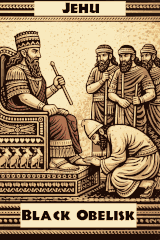
Jehu is depicted on the famous Assyrian Black Obelisk wearing a servant’s cap and bowing at Shalmaneser’s feet. This submission must have occurred in late autumn of 841 BC or before Nisan in 840 BC.
As with the earlier Battle of Qarqar—which occurred after Nisan in the spring of 853 BC during Ahab’s final year—Scripture does not record Ahab’s participation because it was not consequential for Israel. Likewise, it does not mention Jehu’s tribute to Assyria, since the Assyrian yoke upon him was relatively light. The list of goods Jehu paid appears modest when compared with those recorded from other kings, yet it marks a significant shift in Israel’s foreign policy. Jehu’s fragile dynasty aligned itself with Assyria, unlike his predecessors, and at this time he adopted the accession-year system of reckoning.
Syria continually harassed Israel during the reigns of Jehu and his son Jehoahaz until the nation reached a desperate condition. When Jehoahaz humbled himself and prayed, God granted Israel relief through Shalmaneser’s son.
Some students of biblical chronology have questioned Israel’s synchronisms with Shalmaneser III, often in an effort to defend Archbishop Ussher’s chronology or their own reconstructions. A careful review of these objections, however, shows them to be unpersuasive. The synchronisms remain historically credible.
2G-Athaliah Judah
👎 ⬆️2 Kings 11:1–20, 2 Chron. 22:10–23:21
And when Athaliah the mother of Ahaziah saw that her son was dead, she arose and destroyed all the seed royal.
But Jehosheba, the daughter of king Joram, sister of Ahaziah, took Joash the son of Ahaziah, and stole him from among the king's sons which were slain; and they hid him, even him and his nurse, in the bedchamber from Athaliah, so that he was not slain.
And he was with her hid in the house of the Lord six years. And Athaliah did reign over the land.
And the seventh year Jehoiada sent and fetched the rulers over hundreds, with the captains and the guard, and brought them to him into the house of the Lord, and made a covenant with them, and took an oath of them in the house of the Lord, and shewed them the king's son (2 Kings 11:1–4).
When Athaliah learned her grandson, the king had died, she immediately slew all the royal seed. Then she claimed the throne and ruled for more than six inclusive years. The Bible does not provide official rgnal data for Athaliah because she was not a legitimate ruler. She was the last remnant of Ahab and Jezbel's legacy. She was a priestess of the sun god, Baal whose temple flourished in Jerusalm at the expense of the true temple.
Qarqar and Jehu's Tribute.
👎 ⬆️2 Kings 11:21–12:21, 2 Chron. 24:1–27
The Battle of Qarqar in 853 BC—fought in the twenty-eighth and final year of Ahab of Israel and the sixth year of Shalmaneser III of Assyria—and the tribute paid by Jehu to Shalmaneser in that Assyrian king’s eighteenth regnal year together anchor the biblical chronology of the divided Hebrew kingdom to the well-established Assyrian timeline, thereby fixing the Bible’s chronology in absolute time. We have provided this chart as proof to show that the fourth year of Solomon, when he began to build the temple, was 965 BC, not 966 BC as has been popularized. Since that year was the 480th cardianl year since the Exodus, we have proven that the Exodus occurred in 1444 BC.
Joash was annointed king on Saturday, October 8, Tishi 10, 853 BC, which was the Jubilee.
The next phase covers the exciting period from Joash to the death of Hezekiah, spanning three Jubilee cycles. To those who love Bible chronology, get ready for some amazing surprises.