
Lunar day: 17 17: "… Thou hast made heaven, the heaven of heavens, with all their host, the earth, and all things that are therein, the seas, and all that is therein … and the host of heaven worshippeth thee." (Nehemiah 9:6) Bookmark this page.
HealthY Bible Diet Foods
Description and Benefits of Rhubarbs
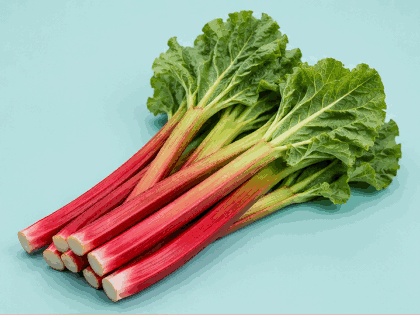
Rhubarb is usually used like a tart fruit in pies, sauces, compotes, and jams, though botanically it is a vegetable. USDA SNAP-Ed lists a serving as 1 stalk, 51 g, and describes rhubarb stalks as tart and ranging from light green to dark red. Rhubarb is low in calories and provides fiber, vitamin K, vitamin C, and antioxidant pigments, especially in redder stalks.
The most important safety point is that only the stalks are eaten; rhubarb leaves should not be consumed because they contain toxic oxalates. Rhubarb’s tartness often leads recipes to add a lot of sugar, so its healthfulness depends heavily on preparation. Lightly stewed rhubarb with fruit, yogurt, oats, or spices is usually more nutrient-forward than very sweet pie filling or syrup.
Nutrition facts calculator for rhubarb fruit products lists calories, vitamins, minerals, charts, and nutrition label for rhubarbs. The major vitamins, minerals, and nutrients contained in your selected serving size of Rhubarbs are displayed below in the following table. A menu of other varieties and quantities of Rhubarbs are also listed on this page. Nutrition facts calculator for rhubarb fruit products lists calories, vitamins, minerals, charts, and a dynamic nutrition label. The current measurement below is 100 grams, but other options and multples are available:
Rhubarb, raw,
USDA SR27 Database Food #09307 Refuse Desc: 19 pct ends, 6 pct leaves Refuse Desc: 25of this type Rhubarb
Measurement Choices:
Rhubarbs supply all of the vitamins, minerals and nutrients listed above.