
Lunar day: 17 17: "… Thou hast made heaven, the heaven of heavens, with all their host, the earth, and all things that are therein, the seas, and all that is therein … and the host of heaven worshippeth thee." (Nehemiah 9:6) Bookmark this page.
HealthY Bible Diet Foods
Description and Benefits of Quinces
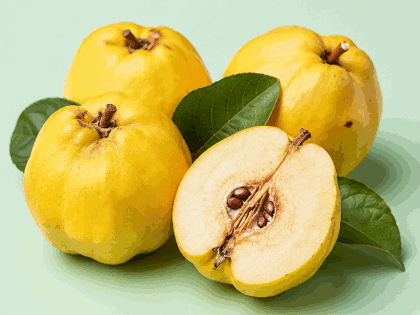
Quince is a firm, aromatic pome fruit related to apples and pears, but it is usually cooked because raw quince is often very hard and astringent. Nutritionally, it is a low-fat, water-rich fruit that provides carbohydrates, fiber, vitamin C, and polyphenol compounds; USDA-linked data list raw quince at about 57 calories per 100 g, and USDA fiber data list raw quinces at 1.9 g fiber.
Its main benefits come from fiber, especially pectin, plus tart flavor and antioxidant plant compounds. Cooked quince works well in compotes, baked fruit, stews, jams, and poached desserts, but added sugar can quickly change the nutrition profile. For the best balance, quince can be cooked with spices, citrus, or a small amount of sweetener rather than turned into very sugary preserves.
Nutrition facts calculator for quince fruit products lists calories, vitamins, minerals, charts, and nutrition label for quinces. The major vitamins, minerals, and nutrients contained in your selected serving size of Quinces are displayed below in the following table. A menu of other varieties and quantities of Quinces are also listed on this page. Nutrition facts calculator for quince fruit products lists calories, vitamins, minerals, charts, and a dynamic nutrition label. The current measurement below is 100 grams, but other options and multples are available:
Quince, rawed, quinces
USDA SR27 Database Food #09296 Refuse Desc: 39of this type Quince
Measurement Choices:
Quinces supply all of the vitamins, minerals and nutrients listed above.