
Lunar day: 17 17: "… Thou hast made heaven, the heaven of heavens, with all their host, the earth, and all things that are therein, the seas, and all that is therein … and the host of heaven worshippeth thee." (Nehemiah 9:6) Bookmark this page.
HealthY Bible Diet Foods
Description and Benefits of Olives
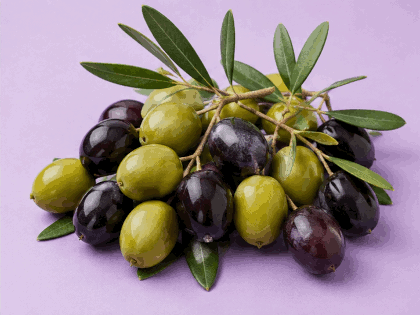
Olives are unusual among fruits because they are rich in fat, especially monounsaturated fat, rather than being mostly carbohydrate. Nutrition summaries consistently describe olives as a source of oleic acid, antioxidants, and vitamin E, with very low cholesterol and relatively few carbohydrates.
Their main benefit is that they fit well into Mediterranean-style eating patterns, adding savory flavor, healthy fats, and polyphenols. The main caution is sodium: most table olives are cured or brined, so they can be salty; one USDA-linked entry for 40 g of green olives lists about 622 mg sodium. For people watching blood pressure or sodium intake, smaller portions or lower-sodium olives are better choices.
Nutrition facts calculator for olive fruit produce lists calories, vitamins, minerals, charts, and nutrition label for olives. The major vitamins, minerals, and nutrients contained in your selected serving size of Olives are displayed below in the following table. A menu of other varieties and quantities of Olives are also listed on this page. Nutrition facts calculator for olive fruit products lists calories, vitamins, minerals, charts, and a dynamic nutrition label. The current measurement below is 100 grams, but other options and multples are available:
Olive, ripe, canned (small-extra large)
USDA SR27 Database Food #09193of this type Olive
Measurement Choices:
Olives supply all of the vitamins, minerals and nutrients listed above.