
Lunar day: 17 17: "… Thou hast made heaven, the heaven of heavens, with all their host, the earth, and all things that are therein, the seas, and all that is therein … and the host of heaven worshippeth thee." (Nehemiah 9:6) Bookmark this page.
HealthY Bible Diet Foods
Description and Benefits of Melons
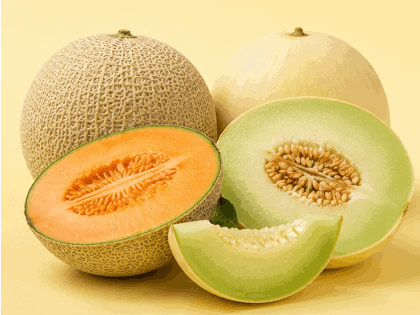
Melons: cantaloupe and honeydew. Cantaloupe and honeydew are hydrating, low-fat fruits with high water content and a mild sweetness. USDA SNAP-Ed lists 1 cup of cubed cantaloupe at about 54 calories, 13 g carbohydrates, 1 g fiber, 13 g sugars, and 65 mg vitamin C, while 1 cup of diced honeydew has about 61 calories, 16 g carbohydrates, 1 g fiber, 14 g sugars, and 34 mg vitamin C.
Cantaloupe stands out for its orange carotenoid pigments and vitamin C, while honeydew offers a crisp, refreshing texture and a gentler flavor. Both are good choices for hydration, snacks, fruit salads, smoothies, and pairing with yogurt or cottage cheese. Because cut melon can support bacterial growth if handled poorly, it is best washed before cutting, kept refrigerated after slicing, and eaten within a safe storage window.
Nutrition facts calculator for melon fruit products lists calories, vitamins, minerals, charts, and nutrition label for melons. The major vitamins, minerals, and nutrients contained in your selected serving size of Melons are displayed below in the following table. A menu of other varieties and quantities of Melons are also listed on this page. Nutrition facts calculator for melon fruit products lists calories, vitamins, minerals, charts, and a dynamic nutrition label. The current measurement below is 100 grams, but other options and multples are available:
Melon, cantaloupe, raw,
includes USDA commodity food A415USDA SR27 Database Food #09181 Common Name: includes USDA commodity food A415 Refuse Desc: 9 pct cavity contents, 1 pct cutting loss, 39 pct rind Refuse Desc: 49
of this type Melon
Measurement Choices:
Melons supply all of the vitamins, minerals and nutrients listed above.