
Lunar day: 17 17: "… Thou hast made heaven, the heaven of heavens, with all their host, the earth, and all things that are therein, the seas, and all that is therein … and the host of heaven worshippeth thee." (Nehemiah 9:6) Bookmark this page.
HealthY Bible Diet Foods
Description and Benefits of Loganberries
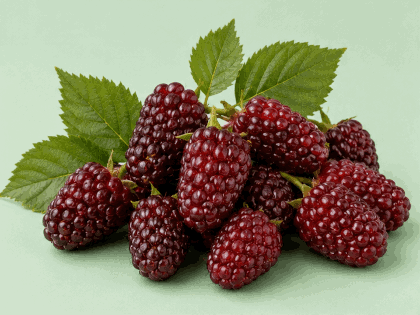
Loganberries are blackberry–raspberry relatives with a deep red-purple color, so their nutritional strengths are similar to other caneberries: fiber, vitamin C, manganese, and polyphenol pigments. USDA-derived nutrition comparisons list loganberries at about 55 calories, 13 g carbohydrates, 5.3 g fiber, and 15.3 mg vitamin C per 100 g, which makes them a high-fiber, relatively low-calorie fruit.
Their health value comes mainly from eating the whole berry: the tiny seeds and skins provide fiber, while the dark pigments add antioxidant polyphenols. They are especially useful in breakfasts, salads, sauces, and desserts where you want tartness and color without relying heavily on added sugar. As with most berries, fresh or unsweetened frozen loganberries are usually more nutritionally useful than jams or syrups, where added sugar can dominate.
Nutrition facts calculator for loganberry fruit products lists calories, vitamins, minerals, charts, and nutrition label for loganberries. The major vitamins, minerals, and nutrients contained in your selected serving size of Loganberries are displayed below in the following table. A menu of other varieties and quantities of Loganberries are also listed on this page. Nutrition facts calculator for loganberry fruit products lists calories, vitamins, minerals, charts, and a dynamic nutrition label. The current measurement below is 100 grams, but other options and multples are available:
Loganberry, frozen,
USDA SR27 Database Food #09167of this type Loganberry
Measurement Choices:
Loganberries supply all of the vitamins, minerals and nutrients listed above.