
Timeless Treasure
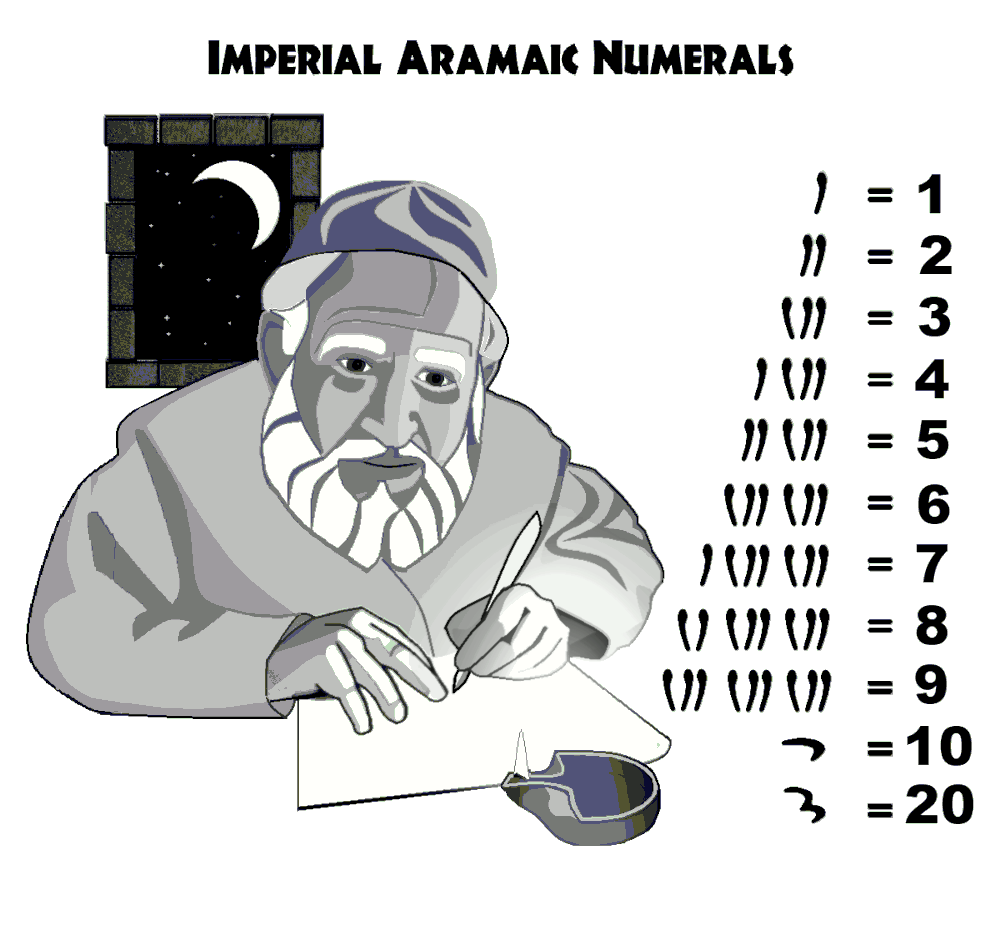
The Aramaic number system used symbols to represent denominations. A single vertical stroke was a one-symbol. A scribe grouped single units into sets of three and often slanted the last closing digit. The next mark was a ten-symbol, which was a horizontal stroke curved at the right end like a fishhook, and a twenty-symbol was two ten symbols stacked vertically. The scribe arranged the symbols in descending order, moving from right to left. Our illustration shows the Imperial Aramaic numerals.
The Egyptian civil calendar was entirely solar, with no lunar influence. Many people think Noah used a 360-day solar calendar comprising thirty-day months. He did not. Noah used a lunisolar calendar based primarily on the lunar cycle. Genesis mentions a 150-day period, which many mistakenly equate with the five months between Marchesvan and Nisan.
“He appointed the moon for seasons: the sun knows his going down” (Psalms 104:19).
It is surprising how often scholars assign a scribal error to a dateline that contradicts their thesis. Instead of using the papyri to reconstruct the calendar, their calendar reconstruction results in reconstructing the papyri. Some even claim Nehemiah made a scribal error when he placed Kislev before Nisan in the same regnal year.